
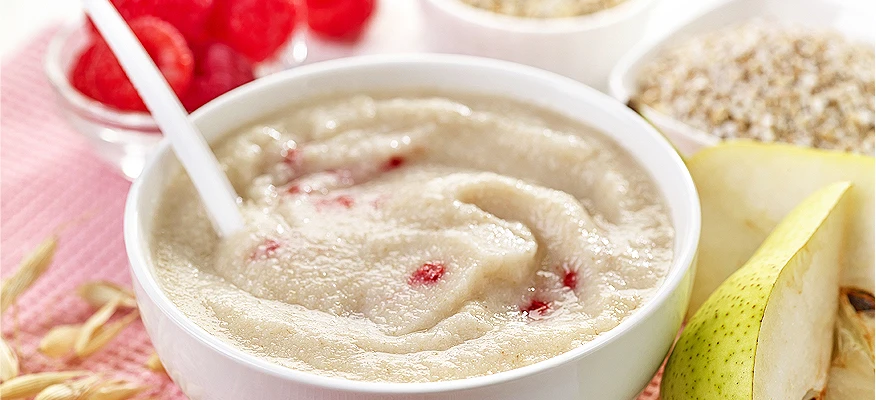
When your baby starts solids around 6 months, oatmeal often becomes one of the very first foods on the menu — and for good reason.
Oatmeal is smooth, gentle on tiny tummies, easy to prepare, and commonly iron-fortified. This is especially important because a baby’s natural iron stores begin to drop around this age. Iron supports healthy brain development, growth, and energy levels, making oatmeal a smart nutritional foundation for early feeding.
Beyond iron, oats also provide fiber to support digestion and slow-release carbohydrates that help keep your baby feeling satisfied for longer. This combination makes oatmeal both nourishing and comforting — a perfect base as your child begins exploring solid foods.
But while plain oatmeal is nutritious, eating it the same way every day can quickly become boring. The good news? With the right mix-ins, oatmeal can become a flavorful, nutrient-rich meal that grows with your baby’s taste buds.
Why oatmeal is a great first food
- Oatmeal is recommended as one of the best early solids because it is iron-fortified, easy to digest, and less likely to trigger allergies compared to other grains (CDC). Iron is especially important since a baby’s natural iron stores begin to run low around 6 months.
- Oats also provide fiber, which supports digestion, and slow-release carbohydrates that help keep your baby full for longer.
- Starting with oatmeal and gradually adding variety is a smart way to make sure your little one develops balanced eating habits.
Fruits to mix with oatmeal
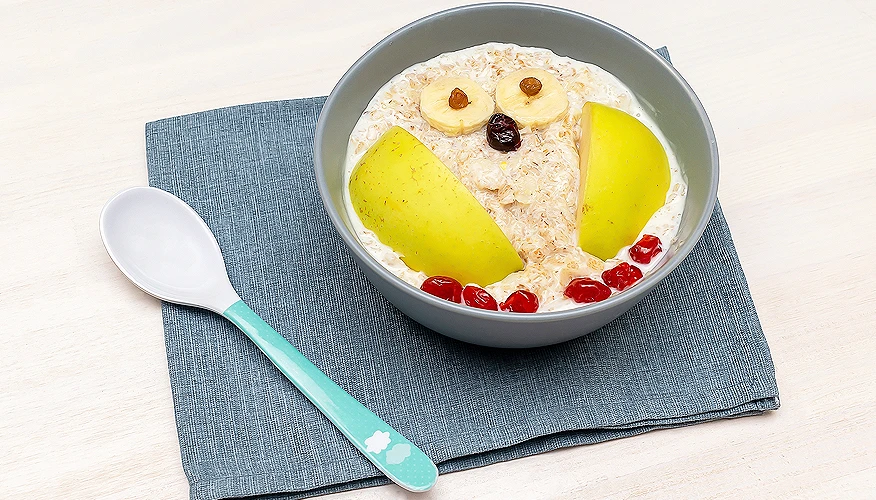
Fruits are often the easiest way to add sweetness and extra nutrition.
- Mashed banana: Rich in potassium and vitamin B6, bananas also add natural sweetness and a creamy texture.
- Applesauce: Cooked, pureed apples provide vitamin C and fiber. Pairing vitamin C-rich apples with oatmeal helps with iron absorption.
- Pear puree: Gentle on sensitive stomachs, pears can ease constipation due to their fiber content.
- Berries (like blueberries or strawberries, cooked and pureed): Packed with antioxidants and vitamin C. Always cook or mash thoroughly for babies.
- Peach or mango puree: Adds bright flavor and plenty of vitamin A.
Each new fruit should be introduced separately at first to monitor for allergic reactions (American Academy of Pediatrics).
Veggie add-ins for extra nutrients
Vegetables might not be the first thing you think of for oatmeal, but they can blend surprisingly well.
- Sweet potato puree: Adds creaminess and is loaded with beta-carotene, which supports eye health.
- Carrot puree: Slightly sweet, carrots are high in vitamin A and antioxidants.
- Pumpkin puree: A fall favorite, pumpkin adds fiber and potassium.
- Spinach puree: Mild in flavor when cooked, spinach adds a boost of iron and folate.
Combining veggies with oatmeal helps babies get used to savory flavors too, which may reduce picky eating later in life (NIH).
Protein-rich mix-in ideas
Babies need protein for muscle growth and overall development. You can boost oatmeal with safe protein add-ins:
- Greek yogurt: Adds creaminess, protein, and calcium. Choose unsweetened, plain yogurt made for babies over 6 months.
- Peanut butter or almond butter: A small spoonful mixed in can provide healthy fats and protein. Early introduction of peanuts has been shown to reduce allergy risk (NIAID guidelines). Always start with tiny amounts.
- Egg yolk: Soft-cooked or scrambled egg yolk mixed into oatmeal is rich in choline, which supports brain development.
- Lentil puree: A plant-based protein source packed with fiber and iron.
Healthy fats to support growth
Healthy fats are crucial for brain and nervous system development in the first two years.
- Avocado: Mashed avocado blends smoothly into oatmeal, offering healthy monounsaturated fats.
- Coconut milk: A small splash can make oatmeal creamy and appealing while adding calories for growing babies.
- Chia seeds or ground flaxseeds: Both are high in omega-3 fatty acids. Always grind or soak them before adding to prevent choking.
These fats also make meals more satisfying and help absorb fat-soluble vitamins like A, D, E, and K (Harvard Health).
Flavor boosters: herbs and spices
Babies can enjoy mild spices and herbs early on. These not only make meals more interesting but also help train their palates.
- Cinnamon: A classic spice for oatmeal that also has antioxidant properties.
- Nutmeg: Adds warmth and depth in small amounts.
- Ginger: A tiny pinch can aid digestion.
- Fresh mint: Finely chopped mint can freshen up fruit-based oatmeal blends.
Avoid adding sugar, honey (not safe before age 1), or salt. Flavoring with natural spices is safer and healthier (AAP).
Tips for safe feeding
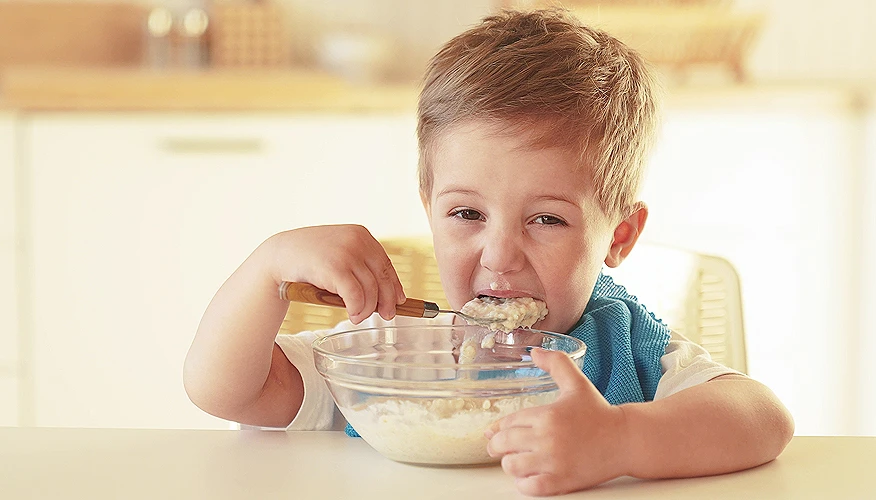
- Start with simple oatmeal and add one new mix-in at a time. Wait 3 days before introducing another new ingredient.
- Watch for allergic reactions such as rashes, diarrhea, or vomiting.
- Keep textures smooth and easy to swallow for younger babies. Gradually increase chunkiness as your baby grows.
- Avoid whole nuts, uncut grapes, or large chunks of food that may cause choking.
- Serve oatmeal warm, not hot.
- These precautions make mealtime both fun and safe.
Conclusion
While oatmeal is a good source of nutrients on its own, a variety of mi-ins could make it truly excellent and a non-boring meal. Its versatile nature helps it mix with fruits, vegetables, proteins, healthy fats, and mild spices, all of which help expand your child’s palate and nutritional intake.
Additionally, it’s not only about oatmeal – it’s an early start of your child’s solids journey, and because it can be made in creative ways, it would teach your baby that food is a nourishing and enjoyable thing to look forward to.
Focus on the balance, variety, and safety, and oatmeal can turn into a daily staple that can grow with your child with different mix-ins and help them grow at each stage in their life.