

Every parent knows that small moment of relief when they finally see a dirty diaper after a few quiet days. But when the wait stretches on, it’s natural to start wondering: Is my baby constipated?
Constipation in babies is a common concern, especially during feeding changes and growth stages. The reassuring news is that most cases are mild and temporary. Once you understand what constipation really means — and what it doesn’t — it becomes much easier to respond calmly and confidently.
What does constipation mean in babies?
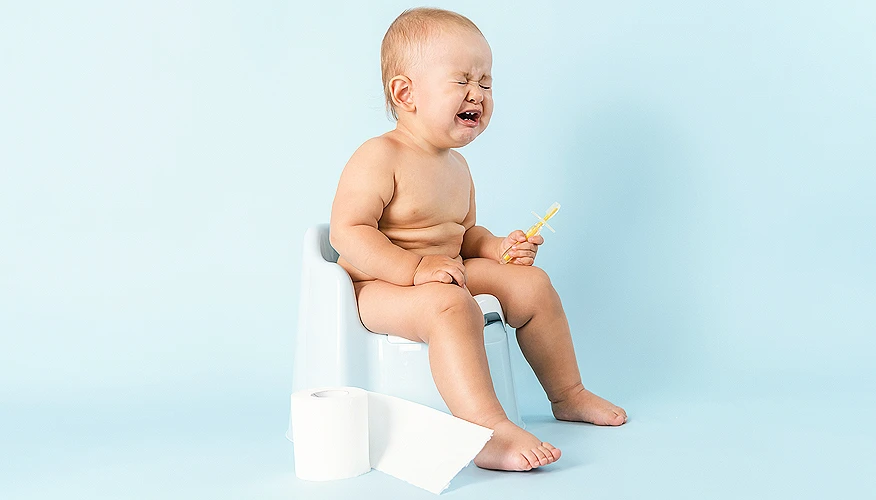
Constipation in babies is not always about how often they poop. For some infants, going a few days without a bowel movement is completely normal, especially if they are breastfed. True constipation means stools are hard, dry, and difficult for your baby to pass (Mayo Clinic).
This is important because frequency alone is not a reliable indicator. What matters most is the texture of the stool and how much effort it takes for your baby to push it out.
How is constipation different from normal stool changes?
Parents are often surprised by how much stool patterns vary in babies. A breastfed newborn may poop several times a day, while an older breastfed baby might go a week without passing stool and still be perfectly healthy (American Academy of Pediatrics).
Formula-fed babies tend to have more regular patterns, but even then, bowel movements can slow down as the digestive system develops. The difference lies in whether your baby seems comfortable. If stools are soft and your baby is content, it is not constipation, even if days pass between bowel movements.
Common causes of constipation in babies
Constipation can appear at different stages, depending on diet and development. Some common causes include:
- Switching to formula: Some babies find it harder to digest formula compared to breast milk.
- Starting solids: Introducing new foods, especially low-fiber ones like rice cereal or bananas, can slow digestion.
- Dehydration: Babies who are not drinking enough milk, formula, or water (if older than 6 months) may develop harder stools.
- Cow’s milk: Introducing cow’s milk before the age of one, or in large amounts after, can sometimes cause constipation (NIH).
- Medical conditions: Rarely, constipation can be linked to thyroid issues or intestinal disorders, though these are uncommon (Cleveland Clinic).
Signs and symptoms parents should watch for
Constipation can look different in each baby, but some signs are common:
- Hard, pellet-like stools.
- Stools that look dry and difficult to pass.
- Straining or turning red in the face with little success.
- A firm or bloated tummy.
- Crying or irritability around bowel movements.
- Small streaks of blood from straining, caused by tiny anal fissures (Mayo Clinic).
It is important to note that grunting or turning red while pooping is often normal. Babies use their whole body to push, and that does not always mean constipation.
Remedies and safe ways to help

Most constipation in babies can be relieved with gentle, safe approaches:
- For breastfed babies: Usually, constipation is rare. If it happens, increasing the mother’s fluid intake or adding more fruits and vegetables to her diet may help.
- For formula-fed babies: Check with your pediatrician to see if a different type of formula might work better.
- For babies on solids: Offer pureed prunes, pears, peaches, or peas. These fruits are rich in fiber and act as natural laxatives (Mayo Clinic).
- Encourage fluids: Babies over 6 months can have small amounts of water in addition to breast milk or formula.
- Tummy time and movement: Gentle bicycle leg exercises or tummy time can stimulate the bowels.
- Warm bath: A warm bath can relax muscles and sometimes help a baby poop more easily.
Parents should avoid giving over-the-counter laxatives, enemas, or mineral oil without medical advice, as these can be unsafe for infants.
When to call your pediatrician
Most cases of constipation are not serious. However, you should call your pediatrician if:
- Constipation lasts more than a week despite home remedies.
- Your baby is younger than 4 months and seems uncomfortable.
- Stools contain large amounts of blood.
- Your baby refuses to eat, vomits, or loses weight.
- The belly looks very swollen or tender.
These could be signs of a more serious condition, and medical care is needed.
Conclusion
Constipation in babies can cause worry, but in most cases, it is a temporary issue tied to diet or growth stages. The key is to look beyond how often your baby poops and pay attention to stool texture, comfort, and overall well-being.
If your baby seems otherwise happy, growing well, and producing wet diapers, occasional changes in bowel movements are usually nothing to panic about. But when stools are hard, painful, or accompanied by other symptoms, it is worth reaching out to your pediatrician. With the right guidance and small changes, constipation can usually be managed safely at home.